I've written plenty of blogs for school and I decided it was time I started one that I started just because I wanted to (not that I didn't enjoy writing the other ones). Deciding on a name was a difficult process. My main interests are feminist and cultural discussions, mostly relating to sex and sexual rights. Not wanting to limit myself to that particular discussion, however, I was forced to come up with a name that reflected my interests and one that was not already taken by someone who wrote one initial post back in 2005 and then abandoned it. Anyone who knows me knows my interest (obsession) with everything Oscar Wilde. I went through my list of favourite Oscar Wilde quotes (it's currently 14 pages single-spaced and nowhere close to finished) and found this one:
“The moment was lost in vulgar details.”
The quote is from chapter six of The Picture of Dorian Gray. Obviously the word "vulgar" carries with it obvious negative connotations I thought it was something I could use and I looked up the specific definition of it. On my Mac dictionary it says the following:
vulgar |ˈvəlgər|
adjective
lacking sophistication or good taste; unrefined : the vulgar trappings of wealth.
• making explicit and offensive reference to sex or bodily functions; coarse and rude : a vulgar joke.
• dated characteristic of or belonging to the masses.
As an arts student I am well versed in the practice of reading waaaaaay too much into ideas/words/sentences/etc but I think this works for many reasons. While I have not picked a specific topic to comment on continuously, as previously mentioned, one of my main interests is discussions about sex and sexuality. Furthermore, if I am looking at popular culture that is something "belonging to the masses," so I think it fits.
Monday, May 24, 2010

Friday, April 9, 2010
Feminist Mad Men?
Mad Men is one of the shows that I follow and, most of the time, enjoy. This past season was also covered regularly and extensively by one of my favourite blogs, Feministing. For those who have never seen this show, it follows the lives of employees, and their families and friends, of an advertising company in the early 1960s. Much focus is given to how the women, predominantly secretaries, are treated and harassed in the workplace as well as how the men treat their wives and other women outside of the workplace. Don Draper, the male lead, regularly cheats on his wife, talks down to her, and when she confides in her psychiatrist, Draper calls him to hear how she is doing, as if she were a child that needed his supervision. The show deals primarily with gender roles and expectations, but is also careful never to show its characters as only two-dimensional based on their genders. Specifically, the female characters are revealed to have many layers and are actually quite strong. While many of them do not fight against how they are treated, and at times seem to accept it with little or no thought, their displeasure and unhappiness are revealed in several ways throughout the series.

Jezebel has an interesting piece on 15 Feminist Moments from Mad Men, including a variety of sexual issues such as self-enjoyment and birth control.
Initially I thought that understanding this show as a feminist tool had only two sides: positive and negative. The first, positive, side was that people would watch this and recognize that much of what happened to women in this series was abuse and harassment. Some of these scenes are intended to shock the viewers so even the least critical audience member would react with disgust to such moments of abuse. This recognition that something has occurred that should not happen to anyone could serve as a feminist awakening. At the same time, however, it must also be considered that there are those who regard this show with no criticism. Some may watch it with a sense of nostalgia for a time when men were allowed to smoke and drink in the office - when "men were men" as some have worded it. An example of this in my own life is when one friend suggested a group of us should have a Mad Men themed party and a guy friend responded with, "Great, we get to drink and treat the girls like shit." Even more problematic is when the values of this particular period are commercially endorsed. Last summer when I was in the US, the Banana Republic was participating in a marketing campaign using the Don Draper character to sell business suits. The outfits resembled those on the show, and men were essentially told that they could be Draper if they wore Banana Republic suits. While Draper may dress fashionably, his personality is not something any man should aspire to.
Upon closer consideration, however, I realized that this show could not be divided only into these two possible interpretations. While there are many of those who will watch this show and acknowledge that no woman or man should be treated how these women are, there is also the problem of seeing this only as a history. The series strives for historical accuracy both in gender expectations and costumes, and this is well known to those who watch the show. Therefore the audience might interpret this treatment only to be something in the past, something that called for feminist interventions then, but have since been solved. They fail to recognize that sexual harassment and assault still occur in many workplaces, even though there are now laws against this. This abuse is just less explicit. Similar to how in the 1960s, slapping a woman's butt was not considered abuse at the time, much of what occurs today is accepted as common practice or hidden from coworkers' eyes. Not wishing to minimize the violence in the past, workplace violence, in a society that declares sexual harassment unconstitutional, has culminated in death at times, such as in the case of Lori Dupont.
My hope, although potentially naive, is that viewers will not only watch this show and recognize what occurs as abuse, but that they also look to their own lives and the lives of their friends in the workplace to recognize that while there have been significant improvements in harassment laws and expectations, there is still much work to be done to eradicate it entirely.
Jezebel has an interesting piece on 15 Feminist Moments from Mad Men, including a variety of sexual issues such as self-enjoyment and birth control.
Initially I thought that understanding this show as a feminist tool had only two sides: positive and negative. The first, positive, side was that people would watch this and recognize that much of what happened to women in this series was abuse and harassment. Some of these scenes are intended to shock the viewers so even the least critical audience member would react with disgust to such moments of abuse. This recognition that something has occurred that should not happen to anyone could serve as a feminist awakening. At the same time, however, it must also be considered that there are those who regard this show with no criticism. Some may watch it with a sense of nostalgia for a time when men were allowed to smoke and drink in the office - when "men were men" as some have worded it. An example of this in my own life is when one friend suggested a group of us should have a Mad Men themed party and a guy friend responded with, "Great, we get to drink and treat the girls like shit." Even more problematic is when the values of this particular period are commercially endorsed. Last summer when I was in the US, the Banana Republic was participating in a marketing campaign using the Don Draper character to sell business suits. The outfits resembled those on the show, and men were essentially told that they could be Draper if they wore Banana Republic suits. While Draper may dress fashionably, his personality is not something any man should aspire to.
Upon closer consideration, however, I realized that this show could not be divided only into these two possible interpretations. While there are many of those who will watch this show and acknowledge that no woman or man should be treated how these women are, there is also the problem of seeing this only as a history. The series strives for historical accuracy both in gender expectations and costumes, and this is well known to those who watch the show. Therefore the audience might interpret this treatment only to be something in the past, something that called for feminist interventions then, but have since been solved. They fail to recognize that sexual harassment and assault still occur in many workplaces, even though there are now laws against this. This abuse is just less explicit. Similar to how in the 1960s, slapping a woman's butt was not considered abuse at the time, much of what occurs today is accepted as common practice or hidden from coworkers' eyes. Not wishing to minimize the violence in the past, workplace violence, in a society that declares sexual harassment unconstitutional, has culminated in death at times, such as in the case of Lori Dupont.
My hope, although potentially naive, is that viewers will not only watch this show and recognize what occurs as abuse, but that they also look to their own lives and the lives of their friends in the workplace to recognize that while there have been significant improvements in harassment laws and expectations, there is still much work to be done to eradicate it entirely.
Thursday, April 8, 2010
Tampons, Periods, and Dancing
I don't have cable when I am in London at school. I can't afford it. Because of this I have been out of the loop, so to speak, of current commercials. I don't really miss them, but tonight, when I actually tried to be healthy and went to the gym, the treadmill I was on had a mini television screen and 40 whole channels. As I was flipping through stations I came across this:
At first I was not aware this actually a commercial for tampons but it makes sense. Advertising techniques are getting old and periods aren't fun. Those buying products for periods are aware of this.For once, the company almost frankly, or at least more so than other advertisements, states what exactly tampons and pads are for. The commercial acknowledges that women do not believe the advertising that certain products will make them want to dance in white clothing during their periods. At the same time, this advertisement reminds me of one for one product or another, that I really wish I remembered, that was marketed along the lines of "You are too smart to believe advertising," and then goes on to say that their product is meant especially for these kinds of people. While I believe it is great that such companies are getting closer to the truth about the reason for their products, it is not because they actually have respect for their consumers, but rather, they recognize that more and more people are becoming aware of common advertising techniques.
Other product advertising that I believe need critical examinations are birth control and pubic area shaving devices.
Really?? Not only does this follow similar advertising techniques of tampon companies by making shaving look fun and worthy of singing and dancing, it also fails entirely to say straightforward what their product is for. Yes, most people will understand what this is for, but why can they not even use other socially acceptable terminology like "bikini line" rather than mowing the lawn.
(Some of the text in the video has been added...the lines that use improper grammar such as "your" instead of "you're." Sorry, I wish I could find a better version of this).
I am having a tough time finding birth control commercials that I remember. At one point, there was a company that played their commercials before movies at the theatre and never explicitly said what it was for. Birth control was never mentioned. One that I remember contained only young females going on a camping trip. There were no men with them and one girl was talking about the importance of remember to pack "it" (a package of pills). While I do recognize that some girls are prescribed the pill for acne and reducing period cramps but it appeared that the entire group of girls was on the pill, with no males in sight. Another company had a campaign of advertisements in which girls whispered and passed notes to one another in high school and photo booths and giggled when boys asked what they were talking about. Is there some law I am unaware of that did not allow for birth control or contraception to be explicitly mentioned in public? This ad that I have linked to, while it does finally mention what exactly they are discussing, the women still have problem saying the terms "period" or "menstruation," and refer only to it as "that time of month." What is so horrible about speaking frank terms?
Emira Mears, writing for the blog Scarleteen, has an interesting post regarding the Eight Myths About Washable Menstrual Pads. She writes, "I've lost my patience with trying to pussyfoot around the issue until women are willing to talk about their own blood."
Menstruation is something natural. It happens whether women wish to acknowledge it or not. It's not fun (at least I have never spoken to someone who found it fun) but it happens. Why do women (and men for that matter) not discuss it as such? Although the first commercial I posted tries to make it clear that periods are not times when women wish to dance and dress up, the very product it's advertising is one that attempts to make menstruation cute or pretty by dying tampons different colours. What the hell is the point of this? Are women too embarrassed to see the colour of their own menstrual blood? How does combining it with blue make it any more attractive or pretty? Is this dye even healthy for you? Mears discusses this very point:
"So why then, you may correctly ask, does the disposable product industry rely so heavily on their 'sanitary' image? Same reason that toilet paper is white, because it has become normal. There's a complex historical argument behind this, but basically somewhere after the second world war, white became a symbol of sanitation. In actual fact, the tampon and disposable pad industry operates under no regulations that ensure sanitation and they aren' t really all that sanitary. They're just white."
I believe that these topics are not ones that need to be coded and hidden. Similar to how I believe people should use the word "vagina" rather than "vajayay" or any other childish term, people should simply come to terms with the fact that women bleed every month. Sometimes we shave our pubic hair and quite a few of us take various forms of birth control. If we cannot talk about these using real words there will always be a sense of shame around normal female bodily functions such as menstruation which is something entirely out of our control unless we wish to suppress them with birth control that prevents it from happening so often.
At first I was not aware this actually a commercial for tampons but it makes sense. Advertising techniques are getting old and periods aren't fun. Those buying products for periods are aware of this.For once, the company almost frankly, or at least more so than other advertisements, states what exactly tampons and pads are for. The commercial acknowledges that women do not believe the advertising that certain products will make them want to dance in white clothing during their periods. At the same time, this advertisement reminds me of one for one product or another, that I really wish I remembered, that was marketed along the lines of "You are too smart to believe advertising," and then goes on to say that their product is meant especially for these kinds of people. While I believe it is great that such companies are getting closer to the truth about the reason for their products, it is not because they actually have respect for their consumers, but rather, they recognize that more and more people are becoming aware of common advertising techniques.
Other product advertising that I believe need critical examinations are birth control and pubic area shaving devices.
Really?? Not only does this follow similar advertising techniques of tampon companies by making shaving look fun and worthy of singing and dancing, it also fails entirely to say straightforward what their product is for. Yes, most people will understand what this is for, but why can they not even use other socially acceptable terminology like "bikini line" rather than mowing the lawn.
(Some of the text in the video has been added...the lines that use improper grammar such as "your" instead of "you're." Sorry, I wish I could find a better version of this).
I am having a tough time finding birth control commercials that I remember. At one point, there was a company that played their commercials before movies at the theatre and never explicitly said what it was for. Birth control was never mentioned. One that I remember contained only young females going on a camping trip. There were no men with them and one girl was talking about the importance of remember to pack "it" (a package of pills). While I do recognize that some girls are prescribed the pill for acne and reducing period cramps but it appeared that the entire group of girls was on the pill, with no males in sight. Another company had a campaign of advertisements in which girls whispered and passed notes to one another in high school and photo booths and giggled when boys asked what they were talking about. Is there some law I am unaware of that did not allow for birth control or contraception to be explicitly mentioned in public? This ad that I have linked to, while it does finally mention what exactly they are discussing, the women still have problem saying the terms "period" or "menstruation," and refer only to it as "that time of month." What is so horrible about speaking frank terms?
Emira Mears, writing for the blog Scarleteen, has an interesting post regarding the Eight Myths About Washable Menstrual Pads. She writes, "I've lost my patience with trying to pussyfoot around the issue until women are willing to talk about their own blood."
Menstruation is something natural. It happens whether women wish to acknowledge it or not. It's not fun (at least I have never spoken to someone who found it fun) but it happens. Why do women (and men for that matter) not discuss it as such? Although the first commercial I posted tries to make it clear that periods are not times when women wish to dance and dress up, the very product it's advertising is one that attempts to make menstruation cute or pretty by dying tampons different colours. What the hell is the point of this? Are women too embarrassed to see the colour of their own menstrual blood? How does combining it with blue make it any more attractive or pretty? Is this dye even healthy for you? Mears discusses this very point:
"So why then, you may correctly ask, does the disposable product industry rely so heavily on their 'sanitary' image? Same reason that toilet paper is white, because it has become normal. There's a complex historical argument behind this, but basically somewhere after the second world war, white became a symbol of sanitation. In actual fact, the tampon and disposable pad industry operates under no regulations that ensure sanitation and they aren' t really all that sanitary. They're just white."
I believe that these topics are not ones that need to be coded and hidden. Similar to how I believe people should use the word "vagina" rather than "vajayay" or any other childish term, people should simply come to terms with the fact that women bleed every month. Sometimes we shave our pubic hair and quite a few of us take various forms of birth control. If we cannot talk about these using real words there will always be a sense of shame around normal female bodily functions such as menstruation which is something entirely out of our control unless we wish to suppress them with birth control that prevents it from happening so often.
Tuesday, March 23, 2010
30 Rock, Kiddie Porn, and Men Telling Me Other Women are Jealous
Alright, so I promised a post a few days ago and here it is. I've been following the show 30 Rock the past couple of years and I was enjoying it until recently. Not only has the dialogue become less funny but the jokes have become painful to witness. I am not going to use the word offended because that's not the right way to describe how I felt about the last episode (there is also a good post I found on how feminists and other groups use that word way too often when there are better and more meaningful ones to use...I will try to find it to post at the end of this post). For those who do not watch the show, here's information about it on tv.com. Comedian Tina Fey stars as the female lead, Liz Lemon, and is also credited as one of the writers.

Before I begin I need to bring up some of the questions and points I will also discuss at the end. I do recognize that, for the most part, 30 Rock's humour is satire. It pokes fun at current issues and people in the media. Therefore, when some of its jokes are disturbing and creepy, I am not sure whether to take issue with the writers of the show or whatever it is that it's making fun of. Turning popular Hollywood titles into porns is pretty common, so when the show turns the title of a book about the rape and murder of a child into a porn title, should I have a problem with the writers of 30 Rock or those who actually do this in the porn industry? When Jack suggests that porn for women consists of an attractive man nodding his head and pretending to listen, do I criticize the writers' ideas of what women find sexy, or the people who create the "Porn for Women" books with pictures of men doing housework? Does it matter that it is satire? Or is the show actually encouraging such beliefs to persist? What about the people who don't catch the references or realize that the writers are only mocking, rather than encouraging, sexist ideas?
Last week's episode, "Don Geiss, America and Hope," started off rather tame and then there was a reference to the book-turned-movie, The Lovely Bones. The context it was in, however, was when popular pay-per-view porn was being discussed. In this episode it was renamed "The Lovely Boner" (it might be some other sexual word play on "bone" and I remember it incorrectly - and if I do would someone please correct me - but it was along those lines). Other current popular films were also used as porn names and that would be fine... if The Lovely Bones was not based on a story about a young girl who is raped and then killed. Although this novel is a fictional story, it was written from a woman who was raped when she was a teenager. She, fortunately, was able to get away but it was later discovered that the man had raped another young girl around the same time and killed her. The novel is based off of this fact but the family the story revolves around is fictional. While I doubt Tina Fey and the writers of the show intended to make it sound like a kiddie rape porn - any title with "bone" in it can easily be turned into a porn title - I still was uncomfortable with this joke. However, it was a brief mention and the show continued.

(Ok, I hate when book covers are reprinted with the actors on the front but I thought this would be a good way to demonstrate just how creepy and disturbing a porn with this on the video cover would be.)
NEXT. Tracey Jordan then reveals that he does not actually have affairs and is embarrassed to let the public knows he is in love with his wife and would never cheat on her. Someone has threatened to publish this information so Jordan begins trying to find a woman to have sex with so he can keep up his image. He even says his wife tells him he better find someone to have an affair with or she is leaving him... or something along those lines. There is then a scene where he tries to seduce Lemon and when she discovers what he is trying to do she stops him and says she will never sleep with him because, "For one thing, I am not unconscious." Cue laughs. I don't find rape jokes particularly funny (in case you couldn't tell to my reaction to the first issue). I don't know why this had to be included as an option. If a woman was unconscious I did not believe she would actually be capable of "sleeping with" someone... that implies some sort of action on her part. Is she suggesting that option to Jordan though? No, I do not think the writers of this show are encouraging or condoning rape - or at least I *hope* they aren't - but that's already two rape jokes in one episode.
FINALLY, at the end of the episode Jack comes up with the idea that will win him recognition: Porn for Women! The men he suggests this to immediately counter with "Women hate porn" to which Jack replies that he means for an attractive man to stare out of the screen and nod his head. After listening to Liz complain about her relationship with a guy she does not like, Jack "realizes" that all women want is for a guy to listen to them complain about *their* issues without interrupting except to say "Uh huh," "really?," and "Oh, she's just jealous of you." Hm... There is a whole other debate I could get into about porn and women and feminism but that is not my point here. Is that really what men believe women to find pornographic or sexy? If so, there must be quite a few disappointed women. According to this idea, women do not actually enjoy or desire sex. Essentially, in this view, women apparently orgasm to a man telling her she is better than another woman or a man doing the dishes. This is a woman's sex life?

Once again, I am not sure the best way to approach these issues. I fail to find the humour in rape, whether or not it is mocking current rape culture. I also feel it's a bit of a problem that not everyone laughs at the show because of its satire, and instead find the jokes funny on their own. I also find my thoughts confusing and conflicting about what difference the writer being female has on my opinion of the jokes. I almost feel that because there is such a strong woman writing the jokes that the jokes should be held to a higher standard. By this I mean, she has the potential to fight against misogynistic jokes that are found in other sitcoms but still relies on rape humour. I also believe this is somewhat hypocritical of me for several reasons. First of all, why should I not also hold men to this standard? Men are just as capable of fighting misogyny as women - in fact, they are the ones writing a lot of the other sitcoms, they have a larger opportunity themselves to put a halt to this. Second of all, just because you are a woman doesn't mean you need to speak for all women. It would be nice to see a female writer stepping above these jokes, but just because she has a vagina does not mean she is feminist. I am not sure how to word my thoughts on this matter but thought I should present these unfinished/edited ideas to whoever is reading this.
Before I begin I need to bring up some of the questions and points I will also discuss at the end. I do recognize that, for the most part, 30 Rock's humour is satire. It pokes fun at current issues and people in the media. Therefore, when some of its jokes are disturbing and creepy, I am not sure whether to take issue with the writers of the show or whatever it is that it's making fun of. Turning popular Hollywood titles into porns is pretty common, so when the show turns the title of a book about the rape and murder of a child into a porn title, should I have a problem with the writers of 30 Rock or those who actually do this in the porn industry? When Jack suggests that porn for women consists of an attractive man nodding his head and pretending to listen, do I criticize the writers' ideas of what women find sexy, or the people who create the "Porn for Women" books with pictures of men doing housework? Does it matter that it is satire? Or is the show actually encouraging such beliefs to persist? What about the people who don't catch the references or realize that the writers are only mocking, rather than encouraging, sexist ideas?
Last week's episode, "Don Geiss, America and Hope," started off rather tame and then there was a reference to the book-turned-movie, The Lovely Bones. The context it was in, however, was when popular pay-per-view porn was being discussed. In this episode it was renamed "The Lovely Boner" (it might be some other sexual word play on "bone" and I remember it incorrectly - and if I do would someone please correct me - but it was along those lines). Other current popular films were also used as porn names and that would be fine... if The Lovely Bones was not based on a story about a young girl who is raped and then killed. Although this novel is a fictional story, it was written from a woman who was raped when she was a teenager. She, fortunately, was able to get away but it was later discovered that the man had raped another young girl around the same time and killed her. The novel is based off of this fact but the family the story revolves around is fictional. While I doubt Tina Fey and the writers of the show intended to make it sound like a kiddie rape porn - any title with "bone" in it can easily be turned into a porn title - I still was uncomfortable with this joke. However, it was a brief mention and the show continued.
(Ok, I hate when book covers are reprinted with the actors on the front but I thought this would be a good way to demonstrate just how creepy and disturbing a porn with this on the video cover would be.)
NEXT. Tracey Jordan then reveals that he does not actually have affairs and is embarrassed to let the public knows he is in love with his wife and would never cheat on her. Someone has threatened to publish this information so Jordan begins trying to find a woman to have sex with so he can keep up his image. He even says his wife tells him he better find someone to have an affair with or she is leaving him... or something along those lines. There is then a scene where he tries to seduce Lemon and when she discovers what he is trying to do she stops him and says she will never sleep with him because, "For one thing, I am not unconscious." Cue laughs. I don't find rape jokes particularly funny (in case you couldn't tell to my reaction to the first issue). I don't know why this had to be included as an option. If a woman was unconscious I did not believe she would actually be capable of "sleeping with" someone... that implies some sort of action on her part. Is she suggesting that option to Jordan though? No, I do not think the writers of this show are encouraging or condoning rape - or at least I *hope* they aren't - but that's already two rape jokes in one episode.
FINALLY, at the end of the episode Jack comes up with the idea that will win him recognition: Porn for Women! The men he suggests this to immediately counter with "Women hate porn" to which Jack replies that he means for an attractive man to stare out of the screen and nod his head. After listening to Liz complain about her relationship with a guy she does not like, Jack "realizes" that all women want is for a guy to listen to them complain about *their* issues without interrupting except to say "Uh huh," "really?," and "Oh, she's just jealous of you." Hm... There is a whole other debate I could get into about porn and women and feminism but that is not my point here. Is that really what men believe women to find pornographic or sexy? If so, there must be quite a few disappointed women. According to this idea, women do not actually enjoy or desire sex. Essentially, in this view, women apparently orgasm to a man telling her she is better than another woman or a man doing the dishes. This is a woman's sex life?
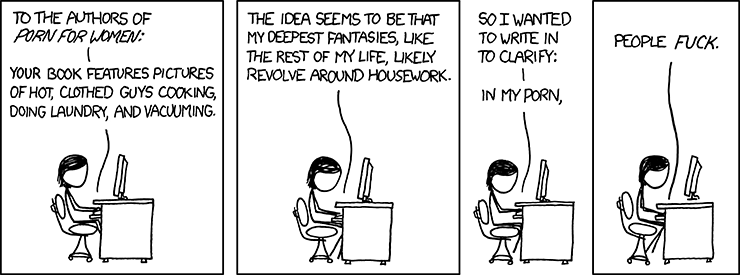
Once again, I am not sure the best way to approach these issues. I fail to find the humour in rape, whether or not it is mocking current rape culture. I also feel it's a bit of a problem that not everyone laughs at the show because of its satire, and instead find the jokes funny on their own. I also find my thoughts confusing and conflicting about what difference the writer being female has on my opinion of the jokes. I almost feel that because there is such a strong woman writing the jokes that the jokes should be held to a higher standard. By this I mean, she has the potential to fight against misogynistic jokes that are found in other sitcoms but still relies on rape humour. I also believe this is somewhat hypocritical of me for several reasons. First of all, why should I not also hold men to this standard? Men are just as capable of fighting misogyny as women - in fact, they are the ones writing a lot of the other sitcoms, they have a larger opportunity themselves to put a halt to this. Second of all, just because you are a woman doesn't mean you need to speak for all women. It would be nice to see a female writer stepping above these jokes, but just because she has a vagina does not mean she is feminist. I am not sure how to word my thoughts on this matter but thought I should present these unfinished/edited ideas to whoever is reading this.
Thursday, February 4, 2010
Virtually Speaking
So as much as I have been enjoying SL lately I have been having a tough time finding exactly what to DO now that I have figured out how to change clothes and have joined activist groups that look interesting. I have been receiving messages from the groups about meetings and events and I have either felt like I am not prepared to participate or mix up the SL and RL times. One of the messages I received today when I just happened to be online at the right time was an invite to Virtually Speaking with Gloria Feldt, Lynn Harris, and Shelby Knox (here's the info). Feldt wrote The War on Choice which is a book that I have used for a few research papers in the past years so I thought I should check it out. I had some initial issues with sound and had to go through the Virtually Speaking radio blog to hear the discussion but I am really glad I did this. Of course I could have just listened to this talk online without SL but on SL the audience was able to type chat during the discussion which was a really great feeling. There are podcasts available from the discussion minus the audience input which is definitely worth checking out if you are at all interested in the topic. I thought I would include some of the comments that really stuck out, unfortunately I do not know which presenter said which comment.
When I finally got the sound working I heard one of them say "Feminists have more and better sex" which I thought was pretty awesome especially considering my earlier post about a few feminist theorists' thoughts about the incompatibility of feminism and heterosexual sex. I love when there are sex positive feminist discussions. Sex (either straight or queer) should not be seen as in opposition to feminism(s). Instead, feminism should allow for a greater discussion about sex and what the individuals want and feel safe with and enjoy.
The next discussion was about purity balls and one woman said how girls pledging themselves to a male god and to their father leaves no room for women's rights. Another woman asked that if a girl feels she must pledge anything, why not pledge to creativity and self worth? She then added that the idea of needing to pledge anything to a male god or your father is highly problematic but that there are alternatives to pledging virginity.
One presenter then went on to say that "femininity is a way of controlling." The imagery surrounding these purity balls are entirely about femininity and feminine qualities; the girls dress in white frilly dresses, their virginity and "purity" are celebrated, and so on.. This forced femininity is a form of controlling these girls, forcing them into this specific role. The presenter went on to say that women must be seen as "whole human beings... capable of making their own decisions," and these balls do not allow for that. If a girl wants to remain abstinent until marriage that's fine... as long as it's HER choice and she has not been forced into because of some ideal her father has for her.
At this point there was some great dialogue going on between the audience. Some were unaware of charity balls until this talk and everyone was really supportive in explaining it. The word "creepy" was used more than once about this phenomena.
One of the greatest comments from the presenters that I heard was when one of them was talking about her three year old daughter wanting to be a princess. Rather than telling her daughter this is "wrong" or "not-feminist" she allowed her daughter to continue with her princess dream but also challenged the typical little girl's understanding of a princess. She then told her daughter that she can be a princess but that to do this she must spend years studying foreign policy and learning at least eight different languages, and studying other topics important to national and political leaders. The audience response was unanimous with "LOL"s, "She's awesome," and so on.
Another important point that was made was in regards to how few young women wish to be identified as feminist. One presenter commented that it is important to examine how women's history is taught and how it leaves no room for role models for these young women to identify with themselves and feminism.
I am glad that I was able to participate in this. I will try to attend more live conferences and participate in group discussions more often. I could have just listened to the online radio version of this discussion but it was made interactive with SL through the audience chat. This way when there were issues of understanding or questions we could all help one another out. It also got a bit repetitive when some few vocal people became obsessed with discussing women's shoes. One guy said something along the lines "women should know better" many other audience members immediately took offense to what he said and the audience discussion began ignoring the three presenters. While this was not ideal, I could turn my attention to the presenters and keep an eye on the chat.
When I finally got the sound working I heard one of them say "Feminists have more and better sex" which I thought was pretty awesome especially considering my earlier post about a few feminist theorists' thoughts about the incompatibility of feminism and heterosexual sex. I love when there are sex positive feminist discussions. Sex (either straight or queer) should not be seen as in opposition to feminism(s). Instead, feminism should allow for a greater discussion about sex and what the individuals want and feel safe with and enjoy.
The next discussion was about purity balls and one woman said how girls pledging themselves to a male god and to their father leaves no room for women's rights. Another woman asked that if a girl feels she must pledge anything, why not pledge to creativity and self worth? She then added that the idea of needing to pledge anything to a male god or your father is highly problematic but that there are alternatives to pledging virginity.
One presenter then went on to say that "femininity is a way of controlling." The imagery surrounding these purity balls are entirely about femininity and feminine qualities; the girls dress in white frilly dresses, their virginity and "purity" are celebrated, and so on.. This forced femininity is a form of controlling these girls, forcing them into this specific role. The presenter went on to say that women must be seen as "whole human beings... capable of making their own decisions," and these balls do not allow for that. If a girl wants to remain abstinent until marriage that's fine... as long as it's HER choice and she has not been forced into because of some ideal her father has for her.
At this point there was some great dialogue going on between the audience. Some were unaware of charity balls until this talk and everyone was really supportive in explaining it. The word "creepy" was used more than once about this phenomena.
One of the greatest comments from the presenters that I heard was when one of them was talking about her three year old daughter wanting to be a princess. Rather than telling her daughter this is "wrong" or "not-feminist" she allowed her daughter to continue with her princess dream but also challenged the typical little girl's understanding of a princess. She then told her daughter that she can be a princess but that to do this she must spend years studying foreign policy and learning at least eight different languages, and studying other topics important to national and political leaders. The audience response was unanimous with "LOL"s, "She's awesome," and so on.
Another important point that was made was in regards to how few young women wish to be identified as feminist. One presenter commented that it is important to examine how women's history is taught and how it leaves no room for role models for these young women to identify with themselves and feminism.
I am glad that I was able to participate in this. I will try to attend more live conferences and participate in group discussions more often. I could have just listened to the online radio version of this discussion but it was made interactive with SL through the audience chat. This way when there were issues of understanding or questions we could all help one another out. It also got a bit repetitive when some few vocal people became obsessed with discussing women's shoes. One guy said something along the lines "women should know better" many other audience members immediately took offense to what he said and the audience discussion began ignoring the three presenters. While this was not ideal, I could turn my attention to the presenters and keep an eye on the chat.
Tuesday, February 2, 2010
Student Magazine
So I really do want to address that National Post article in more detail but I just came across this. The article in question, in case the link does not go directly to the page, is "Student MD: Your Sex Questions Answered!!" and is on page 9 of the Fall 2009 issue of this student publication. The article begins respectable enough, addressing possible health concerns of sex such as STIs, "bumps, scraps, the odd bite mark, fingernail tracks, rug burn, latex or massage oil allergies, hair pulling, leg-cramping and/or burning sensations due to friction..." Scraps? Do they mean scrapes? Or scraps as in fights? OK. Re-reading that part I don't feel they even address the STI issue properly. I do not mean to advocate for abstinence only, I do not mean to argue that sex is "bad" because there is no way I feel that way. However, to put STIs, and not just less harmful ones but "incurable and fatal" ones, on the same level as allergies and minor physical pain is highly problematic. Another part that sounds like there is potential for good discussion is when lots of sex for women is advocated. In my previous post I comment on Catherine MacKinnon's stance that all straight sex is rape. I might be jumping to conclusions this early in the article that the author, Justin Sharpe, is referring to straight sex, but the sentence at the end of the article confirms this, which I will get to. Sharpe uses Dr. Claire Bailey's research from the University of Bristol which states that there,
"is little or no risk for females on 'overdosing' on sex. There are in fact gender specific health benefits associated with having lots of sex, such as improving posture and firming the abdomen."
I am all for promoting healthy sexual lives and establishing a culture that celebrates female sexuality rather than condemns it. At the same time, it should be an individual's choice whether to have sex or not, and with whom, and when. They should not be scared into having sex because of medical research showing that,
"...women who abstain from sex may face greater risks later in life. The opening of the vagina narrows from disuse and in post menopausal women, a condition called Dyspareunia is much more prevalent among sexually inactive women. Dyspareunia is characterized by pain associated with intercourse and could result in vaginal scrapes, should they choose to have sex."
I will not deny there are issues when arts students take on medical issues and vice versa but the way this article is set up is problematic to both fields of study. Women should be able to enjoy sex. They should not feel guilty for wanting and enjoying sex. They should also not feel obligated to have sex because doctors tell them they should. The same applies for men, I just am discussing female sexuality right now because that is what this particular part of the article addresses.
The article continues to say that there are potentially more health risks for men 'overdosing' on sex than women. This is interesting in that there is normal an expectation of men to enjoy sex at anytime and all the time and this article is questioning that assumption. Is it though? It is not questioning social and sexual expectations of men but is instead pointing out potential health risks. These health risks are also considered not much more concerning than the occasional "scrap" suffered during sex though according to this article.
My main concern and point of contention with this article is the conclusion. Until this point, although there are different issues, the article itself is just a piece of harmless fluff. It even has the potential to create discussion around expectations of sex, even if it is as medical concerns rather than social ones. Sex should be discussed. It should be something that is no longer taboo, and if it weren't for the conclusion, this article could potentially be seen as an aide to this, despite its problems. This is how it ends:
"So now it's time to face the facts. STUDENT does not condone whoring by any means, but ladies, for health's sake, now just might be the time to let loose... I'll be at Tap House, Fridays at 11."
I understand this is meant as a joke. I really do. This is meant to be a humorous wrap-up to an article that might be embarrassing or awkward for some people to read. But there is just so much wrong with this, and it being a joke makes it possibly even more problematic. First off - whoring? Really? You just spent a decent time discussing the benefits for women to have as much sex as possible, which I was even willing to give you some credit for maybe wanting to create a space for women to feel comfortable with their sexuality and you then cut it down to "whoring." A practice that you just argued was healthy for women, you are now using derogatory terms to define. Not only that but you say you don't want them to go so far as whoring, as in there is a limit still to how much sex you can enjoy before it becomes whoring. My Mac dictionary defines a whore as "a prostitute; a promiscuous woman." The verb is "(of a woman) to work as a prostitute" but "(of a man)" is "to use the services of prostitutes." Alright, so I could make a whole blog entry about that definition, and maybe I will, but I need to finish something for another class still tonight. So STUDENT doesn't advocate for women being promiscuous? Current social understandings of promiscuous women vary from sex before marriage to various sexual partners is a certain period of time...and all these understandings are hypocritical and problematic. All of these definitions apply only to women. From the dictionary understanding, for a man to whore it only means to have sex with a prostitute. So what counts as whoring to STUDENT? Female students sleeping with more than one guy (and I do stress "guy" because this article is only discussing heterosexual sex) in a school year? A month? A week? A night?
And another thing - "for health's sake"?? Obviously it is for Sharpe's sake alone that this line refers to. Is this the only way he can get women to sleep with him? Advocate that he is only sleeping with them for their benefit? Who is the one whoring here? If that's the term he wants to use, the only "whoring" seems to be Sharpe to the entire female population of UWO. Again, it is a joke but it is a terribly condescending one, and not even a funny one at that. And to assume that all sex women engage in is with a man. Or do the same health benefits not apply to lesbian sex?
"is little or no risk for females on 'overdosing' on sex. There are in fact gender specific health benefits associated with having lots of sex, such as improving posture and firming the abdomen."
I am all for promoting healthy sexual lives and establishing a culture that celebrates female sexuality rather than condemns it. At the same time, it should be an individual's choice whether to have sex or not, and with whom, and when. They should not be scared into having sex because of medical research showing that,
"...women who abstain from sex may face greater risks later in life. The opening of the vagina narrows from disuse and in post menopausal women, a condition called Dyspareunia is much more prevalent among sexually inactive women. Dyspareunia is characterized by pain associated with intercourse and could result in vaginal scrapes, should they choose to have sex."
I will not deny there are issues when arts students take on medical issues and vice versa but the way this article is set up is problematic to both fields of study. Women should be able to enjoy sex. They should not feel guilty for wanting and enjoying sex. They should also not feel obligated to have sex because doctors tell them they should. The same applies for men, I just am discussing female sexuality right now because that is what this particular part of the article addresses.
The article continues to say that there are potentially more health risks for men 'overdosing' on sex than women. This is interesting in that there is normal an expectation of men to enjoy sex at anytime and all the time and this article is questioning that assumption. Is it though? It is not questioning social and sexual expectations of men but is instead pointing out potential health risks. These health risks are also considered not much more concerning than the occasional "scrap" suffered during sex though according to this article.
My main concern and point of contention with this article is the conclusion. Until this point, although there are different issues, the article itself is just a piece of harmless fluff. It even has the potential to create discussion around expectations of sex, even if it is as medical concerns rather than social ones. Sex should be discussed. It should be something that is no longer taboo, and if it weren't for the conclusion, this article could potentially be seen as an aide to this, despite its problems. This is how it ends:
"So now it's time to face the facts. STUDENT does not condone whoring by any means, but ladies, for health's sake, now just might be the time to let loose... I'll be at Tap House, Fridays at 11."
I understand this is meant as a joke. I really do. This is meant to be a humorous wrap-up to an article that might be embarrassing or awkward for some people to read. But there is just so much wrong with this, and it being a joke makes it possibly even more problematic. First off - whoring? Really? You just spent a decent time discussing the benefits for women to have as much sex as possible, which I was even willing to give you some credit for maybe wanting to create a space for women to feel comfortable with their sexuality and you then cut it down to "whoring." A practice that you just argued was healthy for women, you are now using derogatory terms to define. Not only that but you say you don't want them to go so far as whoring, as in there is a limit still to how much sex you can enjoy before it becomes whoring. My Mac dictionary defines a whore as "a prostitute; a promiscuous woman." The verb is "(of a woman) to work as a prostitute" but "(of a man)" is "to use the services of prostitutes." Alright, so I could make a whole blog entry about that definition, and maybe I will, but I need to finish something for another class still tonight. So STUDENT doesn't advocate for women being promiscuous? Current social understandings of promiscuous women vary from sex before marriage to various sexual partners is a certain period of time...and all these understandings are hypocritical and problematic. All of these definitions apply only to women. From the dictionary understanding, for a man to whore it only means to have sex with a prostitute. So what counts as whoring to STUDENT? Female students sleeping with more than one guy (and I do stress "guy" because this article is only discussing heterosexual sex) in a school year? A month? A week? A night?
And another thing - "for health's sake"?? Obviously it is for Sharpe's sake alone that this line refers to. Is this the only way he can get women to sleep with him? Advocate that he is only sleeping with them for their benefit? Who is the one whoring here? If that's the term he wants to use, the only "whoring" seems to be Sharpe to the entire female population of UWO. Again, it is a joke but it is a terribly condescending one, and not even a funny one at that. And to assume that all sex women engage in is with a man. Or do the same health benefits not apply to lesbian sex?
For those who haven't seen this yet...
I am not sure this article merits a response or deserves my time but I am going to try to respond to the following: Women's Studies is still with us. While responding to this, I am going to pick out particular arguments they make and attempt to understand where they are getting these ideas. At best, I can guess that they may have flipped through an introductory women's studies' textbook and taken it with the assumption that because a student reads one particular theory he or she must automatically believe it. This was written by the National Post Editorial Board - I am not entirely sure who or how many individuals this means. The article begins with stating,
"The radical feminism behind these courses has done untold damage to families, our court systems, labour laws, constitutional freedoms and even the ordinary relations between men and women."
I am always skeptical when people use the term "radical feminism," especially when they then apply to mean "all feminism" and "all women's studies students." The term "radical," defined by the dictionary application on my computer, means, "relating to or affecting the fundamental nature of something; far-reaching or thorough... characterized by departure from tradition; innovative or progressive." Another definition: "advocating thorough or complete political or social reform; representing or supporting an extreme section of a political party" and, "of or relating to the root of something." Defined this way, "radical feminism" is an attempt to find the root of female oppression and may involve complete social or political reform. From Wikipedia:
"Patriarchal theory is not always as single-sided as the belief that all men always benefit from the oppression of all women. Patriarchal theory maintains that the primary element of patriarchy is a relationship of dominance, where one party is dominant and exploits the other party for the benefit of the former. Radical feminists have claimed that men use social systems and other methods of control to keep non-dominant men and women suppressed. Radical feminists believe that eliminating patriarchy, and other systems which perpetuate the domination of one group over another, will liberate everyone from an unjust society."
One important issue of radical feminism (and it is important that just as radical feminism is a branch of "feminism," there are still many branches of radical feminism) is to challenge heteronormative beliefs; that is the social assumption that heterosexuality and other qualities such as monogamy and reproduction are normal relationship standards. This obviously does not mean that each woman graduating from Women's Studies rejects relationships with men and it also does not mean every lesbian is a lesbian because she hates men or wants to be a political statement. There are theorists, however, such as Catherine Mackinnon, who go on to construct all of heterosexuality as a dominance of men over women. MacKinnon was very important to current understandings of rape and did much work to bring this topic into the public arena and to draw attention to how often rape happens. She then went, at least from my perspective, a bit too far to suggest that all heterosexual sex is rape. She does still bring up some interesting ideas. In her essay, "Toward a Feminist Theory of the State," she writes,
"To be clear: what is sexual is what gives a man an erection... All this suggests that what is called sexuality us the dynamic of control by which male dominance - in forms that range from intimate to institutional, from a look to a rape - eroticizes and thus defines man and woman, gender identity and sexual pleasure." (Feminisms 354)
This quote on its own might still have merit. I think definitions of sexual are changing in today's culture, not always towards a feminist expression but not always on man's terms. At the same time, however, much of what is defined as "sexy" is essentially what advertisers expect men to find sexy. I word that intentionally. To say all men agree on one definition of sexy is highly problematic but I do see some merit to what MacKinnon says.
HOWEVER. And this is an important however, MacKinnon then continues to argue,
"Male sexuality is apparently activated by violence against women and expresses itself in violence against women to a certain extent." (355)
MacKinnon does not define what she means by violence here...it could be violence to women's intelligence, independence, etc or it could be physical violence. She continues:
"Rape and intercourse are not authoritatively separated by any difference between the physical acts or amount of force involved but only legally, by a standard that centers on the man's interpretation of the encounter." (356)
MacKinnon raises an important issue of creating a space for women to discuss and define their own sexualities and what they find sexual, but I do not see why she must compare ALL heterosexual sex as rape. Perhaps she feels there is no space at all for women to speak up and only do what men want. The point here, is that when I read this I do not automatically agree with MacKinnon. I instead read the article and find points that I can agree with and parts that I must question and wonder where she is coming from. Is this what the National Post means when they write,
"Over the years, Women's Studies scholars have argued all heterosexual sex is oppression because its "penetrative nature" amounts to "occupation."" ??
MacKinnon has only come to my attention because I have done quite a bit of research on violence against women and rape but obviously there has not once been a professor presenting her theory, or any theory for that matter, as fact. Not one of my professors has told me I am oppressed because I have a boyfriend, and not once has a professor tried to tell the class that we should all become lesbians. This is why I feel there is no point responding to this article. All of this seems so obvious. That being said, this will probably be followed by another post to respond to more of the article.
"The radical feminism behind these courses has done untold damage to families, our court systems, labour laws, constitutional freedoms and even the ordinary relations between men and women."
I am always skeptical when people use the term "radical feminism," especially when they then apply to mean "all feminism" and "all women's studies students." The term "radical," defined by the dictionary application on my computer, means, "relating to or affecting the fundamental nature of something; far-reaching or thorough... characterized by departure from tradition; innovative or progressive." Another definition: "advocating thorough or complete political or social reform; representing or supporting an extreme section of a political party" and, "of or relating to the root of something." Defined this way, "radical feminism" is an attempt to find the root of female oppression and may involve complete social or political reform. From Wikipedia:
"Patriarchal theory is not always as single-sided as the belief that all men always benefit from the oppression of all women. Patriarchal theory maintains that the primary element of patriarchy is a relationship of dominance, where one party is dominant and exploits the other party for the benefit of the former. Radical feminists have claimed that men use social systems and other methods of control to keep non-dominant men and women suppressed. Radical feminists believe that eliminating patriarchy, and other systems which perpetuate the domination of one group over another, will liberate everyone from an unjust society."
One important issue of radical feminism (and it is important that just as radical feminism is a branch of "feminism," there are still many branches of radical feminism) is to challenge heteronormative beliefs; that is the social assumption that heterosexuality and other qualities such as monogamy and reproduction are normal relationship standards. This obviously does not mean that each woman graduating from Women's Studies rejects relationships with men and it also does not mean every lesbian is a lesbian because she hates men or wants to be a political statement. There are theorists, however, such as Catherine Mackinnon, who go on to construct all of heterosexuality as a dominance of men over women. MacKinnon was very important to current understandings of rape and did much work to bring this topic into the public arena and to draw attention to how often rape happens. She then went, at least from my perspective, a bit too far to suggest that all heterosexual sex is rape. She does still bring up some interesting ideas. In her essay, "Toward a Feminist Theory of the State," she writes,
"To be clear: what is sexual is what gives a man an erection... All this suggests that what is called sexuality us the dynamic of control by which male dominance - in forms that range from intimate to institutional, from a look to a rape - eroticizes and thus defines man and woman, gender identity and sexual pleasure." (Feminisms 354)
This quote on its own might still have merit. I think definitions of sexual are changing in today's culture, not always towards a feminist expression but not always on man's terms. At the same time, however, much of what is defined as "sexy" is essentially what advertisers expect men to find sexy. I word that intentionally. To say all men agree on one definition of sexy is highly problematic but I do see some merit to what MacKinnon says.
HOWEVER. And this is an important however, MacKinnon then continues to argue,
"Male sexuality is apparently activated by violence against women and expresses itself in violence against women to a certain extent." (355)
MacKinnon does not define what she means by violence here...it could be violence to women's intelligence, independence, etc or it could be physical violence. She continues:
"Rape and intercourse are not authoritatively separated by any difference between the physical acts or amount of force involved but only legally, by a standard that centers on the man's interpretation of the encounter." (356)
MacKinnon raises an important issue of creating a space for women to discuss and define their own sexualities and what they find sexual, but I do not see why she must compare ALL heterosexual sex as rape. Perhaps she feels there is no space at all for women to speak up and only do what men want. The point here, is that when I read this I do not automatically agree with MacKinnon. I instead read the article and find points that I can agree with and parts that I must question and wonder where she is coming from. Is this what the National Post means when they write,
"Over the years, Women's Studies scholars have argued all heterosexual sex is oppression because its "penetrative nature" amounts to "occupation."" ??
MacKinnon has only come to my attention because I have done quite a bit of research on violence against women and rape but obviously there has not once been a professor presenting her theory, or any theory for that matter, as fact. Not one of my professors has told me I am oppressed because I have a boyfriend, and not once has a professor tried to tell the class that we should all become lesbians. This is why I feel there is no point responding to this article. All of this seems so obvious. That being said, this will probably be followed by another post to respond to more of the article.
Subscribe to:
Posts (Atom)